

Feng shui and building science are rarely mentioned together. One gets dismissed as superstition. The other is treated as hard engineering. But compare what each system actually recommends, and the overlap is remarkable.
This is not a claim that ancient Chinese practitioners understood thermal modelling. The truth is more interesting. Across centuries of careful observation, Feng Shui masters developed spatial design principles. Modern building science is now confirming many of them through controlled experiments and peer-reviewed research.
For anyone who has wondered whether Feng Shui has any real basis, the scientific community’s answer may surprise you. It is more nuanced — and more favourable — than most people expect.
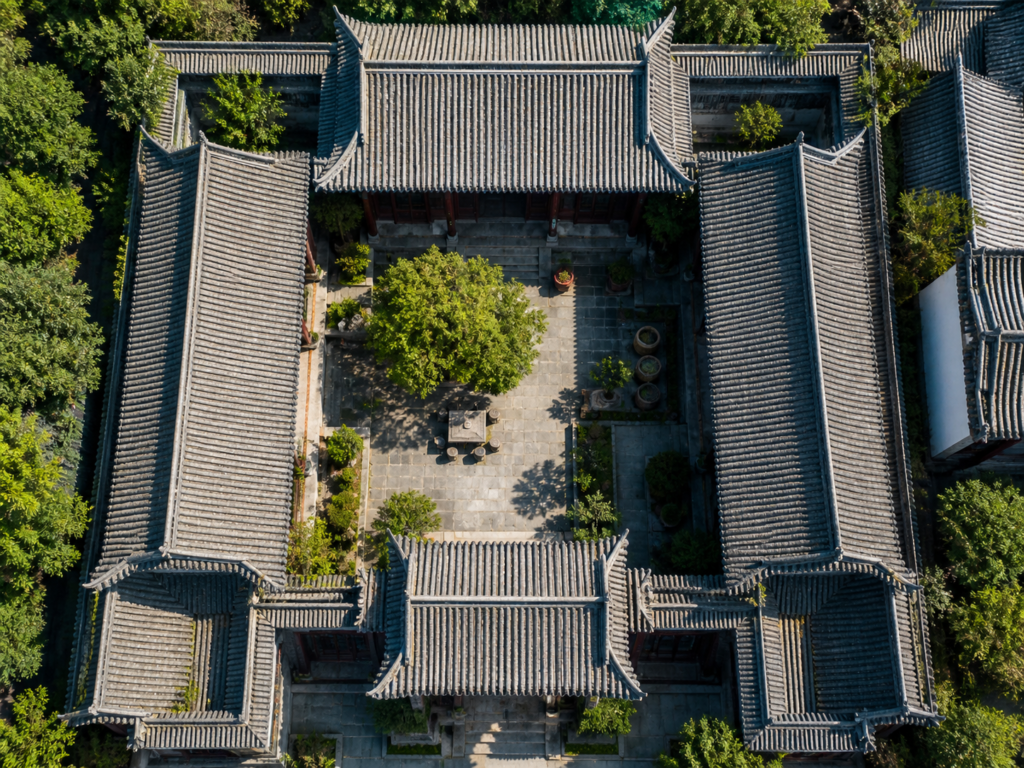
The Convergence Nobody Talks About
In 2023, a systematic review was published in the National Library of Medicine. It examined every empirical study of Feng Shui in the academic literature. The conclusion was striking. Feng Shui demonstrated good reliability. It was valid with respect to environmental features.
The researchers found two specific results worth highlighting. Feng Shui environments in Asia produced more comfortable wind conditions than non-Feng Shui settings. Feng Shui principles also correlated with favourable sunlight exposure.
The study stopped short of calling Feng Shui a science. But it definitively rejected the label of superstition. The researchers called for more rigorous field experiments to test what classical practitioners have observed for centuries.
This is not an isolated finding. Across architecture, environmental psychology, and biophilic design, researchers keep arriving at the same conclusions. Classical Feng Shui reached them long ago — through different methods but with the same practical results.
Airflow: Where Feng Shui and Engineering Say the Same Thing
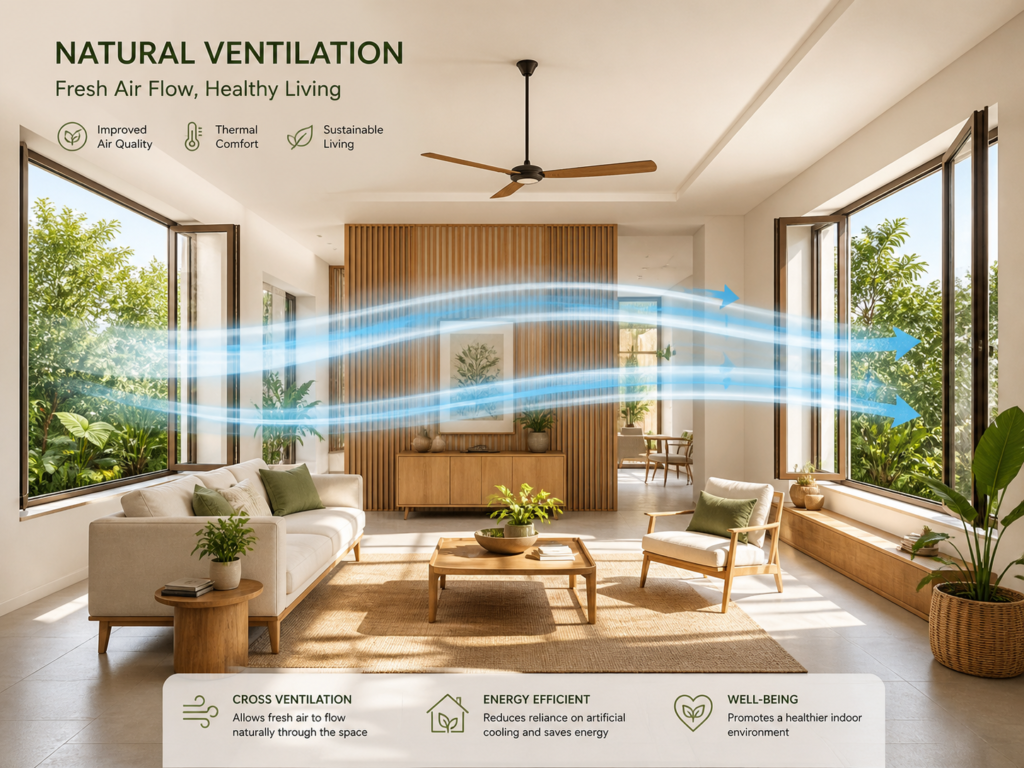
One of the most fundamental principles in classical Feng Shui is the management of Qi flow through a space. Qi — often translated as “energy” — is closely associated with airflow in its most tangible form. A space where Qi stagnates feels oppressive. A space where Qi rushes through too quickly feels unsettled. The ideal is steady, gentle circulation.
Building science has an almost identical framework. Natural ventilation research confirms that steady cross-ventilation reduces indoor pollutant concentration, lowers the risk of airborne disease transmission, and measurably improves cognitive function. Stagnant indoor air — what a Feng Shui practitioner would call “dead Qi” — leads to what building scientists term “sick building syndrome”: headaches, fatigue, difficulty concentrating, and respiratory irritation.
The parallel extends to specifics. Feng Shui warns against long, narrow corridors that accelerate Qi into a rushing force — the so-called “poison arrow” effect. Aerodynamic research confirms that narrow corridors create a venturi effect, increasing air velocity and creating uncomfortable pressure differentials. Feng Shui recommends that rooms have at least two openings to allow Qi to enter and exit gracefully. Building science calls this cross-ventilation and considers it the most effective natural ventilation strategy available.
The language is different. The underlying observation is the same.
Orientation and Daylight: Ancient Compasses, Modern Data
In classical Feng Shui, the compass orientation of a building is not a minor detail — it is the foundation of the entire assessment. The Flying Star system maps energy patterns based on a building’s precise facing direction, and practitioners have traditionally favoured orientations that maximise beneficial solar exposure while minimising harsh environmental forces.
The connection between feng shui and building science [KP] is especially clear here. Modern solar design research shows that building orientation is one of the single most important factors in occupant wellbeing. South-facing buildings in the Northern Hemisphere — and north-facing in the Southern Hemisphere — receive optimal daylight distribution throughout the year. This is not a trivial aesthetic preference. Research has consistently demonstrated that adequate natural light improves sleep quality by regulating circadian rhythms, enhances cognitive performance and workplace productivity, reduces symptoms of depression and anxiety, and lowers energy consumption by reducing dependence on artificial lighting.
Classical Feng Shui practitioners did not have lux meters. But they had centuries of case studies linking building orientation to the health and prosperity of occupants. The recommendation to face a building toward optimal solar exposure appears across virtually every classical Feng Shui text — not as a spiritual directive, but as a practical observation refined over generations.
The “Commanding Position” and Environmental Psychology
One of the most widely taught Feng Shui principles is the “commanding position” — the idea that your bed, desk, or primary seating should be placed where you can see the entrance to the room without being directly in line with it, with a solid wall behind you for support.
Environmental psychology has a name for this: prospect-refuge theory, first articulated by geographer Jay Appleton in 1975. The theory proposes that humans instinctively prefer environments that offer a wide field of view (prospect) combined with a sense of enclosure or protection at the back (refuge). This preference is rooted in evolutionary survival — our ancestors needed to see approaching threats while having a secure position to retreat to.
Controlled studies have confirmed that people report lower anxiety, greater sense of control, and better concentration when seated in prospect-refuge configurations. Office workers positioned with their backs to open spaces or doorways report higher stress levels than those facing outward with a wall behind them.
The feng shui and building science communities arrived at the same conclusion independently. The classical practitioner says your back should be “supported by the mountain.” The environmental psychologist says you need refuge at your rear. The effect on the human nervous system is identical.
Clutter, Spatial Density, and Cognitive Load
Feng Shui has always emphasised the importance of decluttering — not merely as tidiness, but as a principle of allowing Qi to flow freely through a space. A cluttered room, in classical terms, traps and stagnates energy, creating heaviness and stagnation that affects the occupants’ mental clarity and motivation.
Neuroscience has caught up. Research from Princeton University’s Neuroscience Institute demonstrated that visual clutter competes for neural representation, effectively overloading the brain’s capacity to focus. In simple terms, a messy environment makes it harder to think. Separate research has linked household clutter to elevated cortisol levels — the stress hormone — particularly in women.
This is one of the areas where the alignment between feng shui and building science is most straightforward. Both systems observe that the density and organisation of objects within a space directly affect human cognitive and emotional states. The classical practitioner describes this in terms of Qi stagnation. The neuroscientist describes it in terms of attentional competition. The practical recommendation is the same: clear the space, clear the mind.
Water Placement: Not Where You Think
In popular Feng Shui, water features are often recommended as universal wealth enhancers — “put a fountain in the southeast.” Classical practitioners know this advice is not just oversimplified; it can be actively harmful when applied without a proper assessment.
In the Flying Star system, water activates whichever energy star occupies a given sector. If that sector carries a beneficial wealth star, water enhances it. If the sector carries a hostile star associated with illness or conflict, water amplifies that instead.
Building science offers a parallel caution. Poorly placed water features in buildings can increase humidity to levels that promote mould growth, dust mite proliferation, and respiratory problems. Research on indoor humidity recommends maintaining relative humidity between 40 and 60 percent — and indoor water features, particularly in enclosed or poorly ventilated spaces, can push humidity well above this range.
Both disciplines agree: water in the built environment is powerful, and its placement requires analysis, not guesswork.
Biophilic Design: The Modern Framework That Mirrors Feng Shui
Perhaps the strongest bridge between feng shui and building science [KP] is the rapidly growing field of biophilic design — a design philosophy based on the idea that humans function best in environments that maintain a connection with the natural world.
Biophilic design principles include maximising natural light and ventilation, incorporating living plants and natural materials, using organic shapes and patterns rather than purely geometric ones, providing views of nature or green spaces, and using water elements thoughtfully.
A global workplace study by Human Spaces found that workers in environments incorporating these natural elements were six percent more productive, fifteen percent more creative, and reported fifteen percent higher levels of overall wellbeing compared to those in sterile, conventional office environments.
Read that list of biophilic design principles again. Now consider what classical Feng Shui has recommended for centuries: maximise natural light and airflow, bring living greenery into the space, favour flowing organic forms over sharp angular ones, orient buildings toward natural landscapes, and use water with care and intention.
The vocabulary is different. The design recommendations are nearly identical.
The Five Elements as a Material Science Framework
Classical Feng Shui organises all matter and energy into five elemental categories — Wood, Fire, Earth, Metal, and Water. Each element corresponds to specific materials, colours, shapes, and environmental qualities. The practitioner’s goal is to achieve a dynamic balance among these elements within a space.
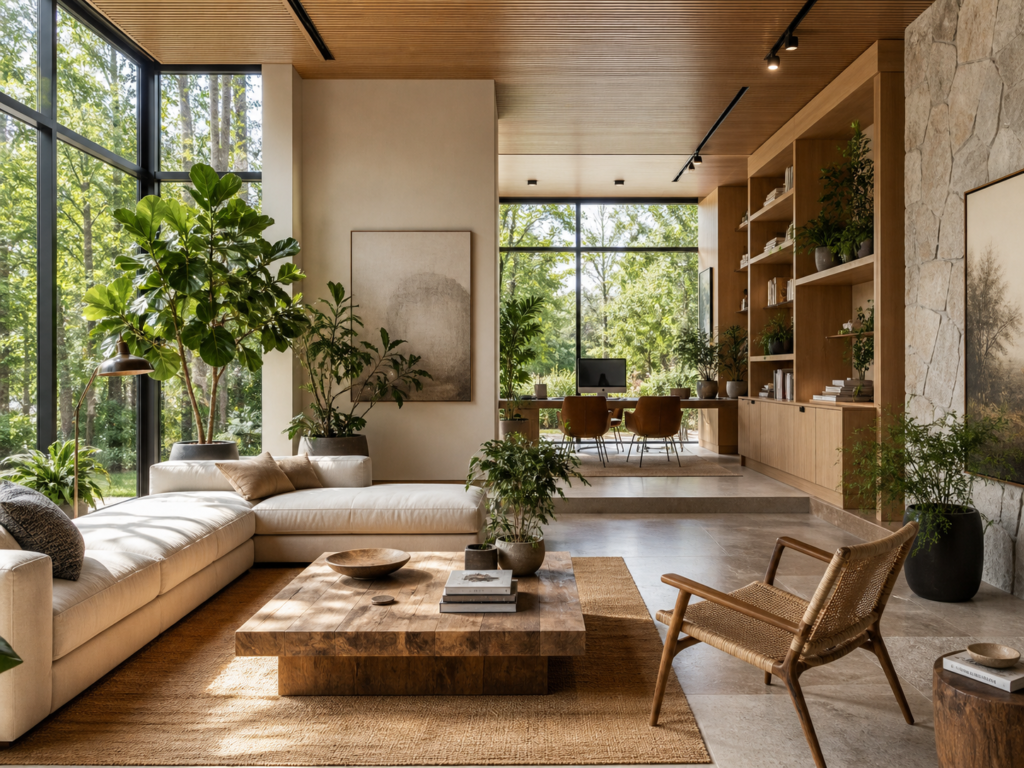
From a building science perspective, this maps onto what researchers call “material diversity” in interior environments. Spaces dominated by a single material category — all concrete and steel, or all plastic and synthetic fibre — tend to feel monotonous and psychologically taxing. Environments that blend natural wood, stone, metal, textiles, and water elements consistently score higher on occupant satisfaction surveys.
The Feng Shui framework of Five Element balance is, at its core, a sophisticated system for thinking about material harmony in the built environment — developed long before the term “material palette” entered the architectural lexicon.
What Building Science Cannot Replace
It would be intellectually dishonest to suggest that building science validates every aspect of Feng Shui. The metaphysical dimensions of classical practice — the influence of time cycles, the role of the practitioner’s lineage and spiritual cultivation, the specifics of the Flying Star energy chart — operate in a framework that empirical science has not yet tested comprehensively.
But the reverse is equally important: it would be intellectually dishonest to dismiss a system that aligns with modern evidence as thoroughly as feng shui and building science do in their core spatial recommendations.
The value of classical Feng Shui is that it provides an integrated framework — one that considers orientation, airflow, material balance, spatial organisation, and the specific needs of the individual occupant simultaneously. Building science tends to address these factors in isolation. Feng Shui has always treated them as interconnected.
For the practitioner, the growing body of scientific evidence is not a surprise. It is a confirmation of what careful observation over millennia had already established.
What This Means for Your Home
If you are interested in applying these principles to your own living space, the research suggests starting with the factors that both systems agree on most strongly: ensure adequate natural light and ventilation in every occupied room, avoid placing primary seating or sleeping positions with your back to an entrance, reduce visual clutter in areas where you need to think or rest, introduce natural materials and living plants where possible, and pay attention to how each room makes you feel — your body is already registering information that both Feng Shui and building science can help you interpret.
For a deeper analysis — one that accounts for your building’s specific compass orientation, construction period, and energy chart — a personalised Feng Shui assessment provides the level of specificity that general principles cannot.
The ancient practitioners were not guessing. And increasingly, modern science is proving it.
Dr. Jason E is a lineage holder in four classical Daoist traditions, President of the Australian Chinese I Ching Association, and the founder of Lumen Tao. He offers personalised Feng Shui assessments that integrate classical method with an understanding of modern building environments.
Book a Personal Feng Shui Consultation →
